Jumat, 21 Januari 2011

Something's Broken? Part 2

OK, we have said "Houston, we have a problem". It's important to differentiate between normal drawdown and a problem. Usually, the look of the chart gives the answer.

If the issue is YOU, then it's easy. Stop trading until whatever took away your focus and discipline passes. I know I can't focus on two things at the same time, so I try not to.

If it's the market then what I do is identify what is happening: usually one of two things - sideways chop or change in volatility.

If it's sideways chop then I change modes from trading inside-out to trading outside-in, fading the moves. I can use the Keltner or CCI extremes to do this.

If its volatility, it can be more volatile or less volatile. Are targets not being met or are stops being continually hit? More volatile, I can increase my range bars and less volatile I can shorten them. When I do this I make sure that the resulting chart is smooth and without too much bar overlap. I look at my CCIs as well, ensuring that they look "normal". In the next part, I'll talk about daily profit targets and loss limits. 

Meanwhile, I found my trading badge from the old LIFFE days. It's a little worse for wear. It had my mnemonic originally outlined in green on all the letters, which signified I was a local and did not fill paper. I also had an old Disneyland badge on my jacket that said "Bear Country" as like most locals, I preferred the short side of the market because I made more money more quickly. Another local offered me 1,000 pounds for it one day after I had had a particularly good day. Like an idiot, I didn't want to sell my "lucky" badge. I don't even know where it is now. Probably still on an old trading jacket being used as rags.


EDIT: Mrs EL read the draft of this post and went to ebay and bought me my lost Bear Country pin. What a Lady!!!  I'm now an even bigger idiot for missing out on a great trade; SELL 1 Bear pin @ £1,000 and BUY it back for $5.95. What a trade to miss.

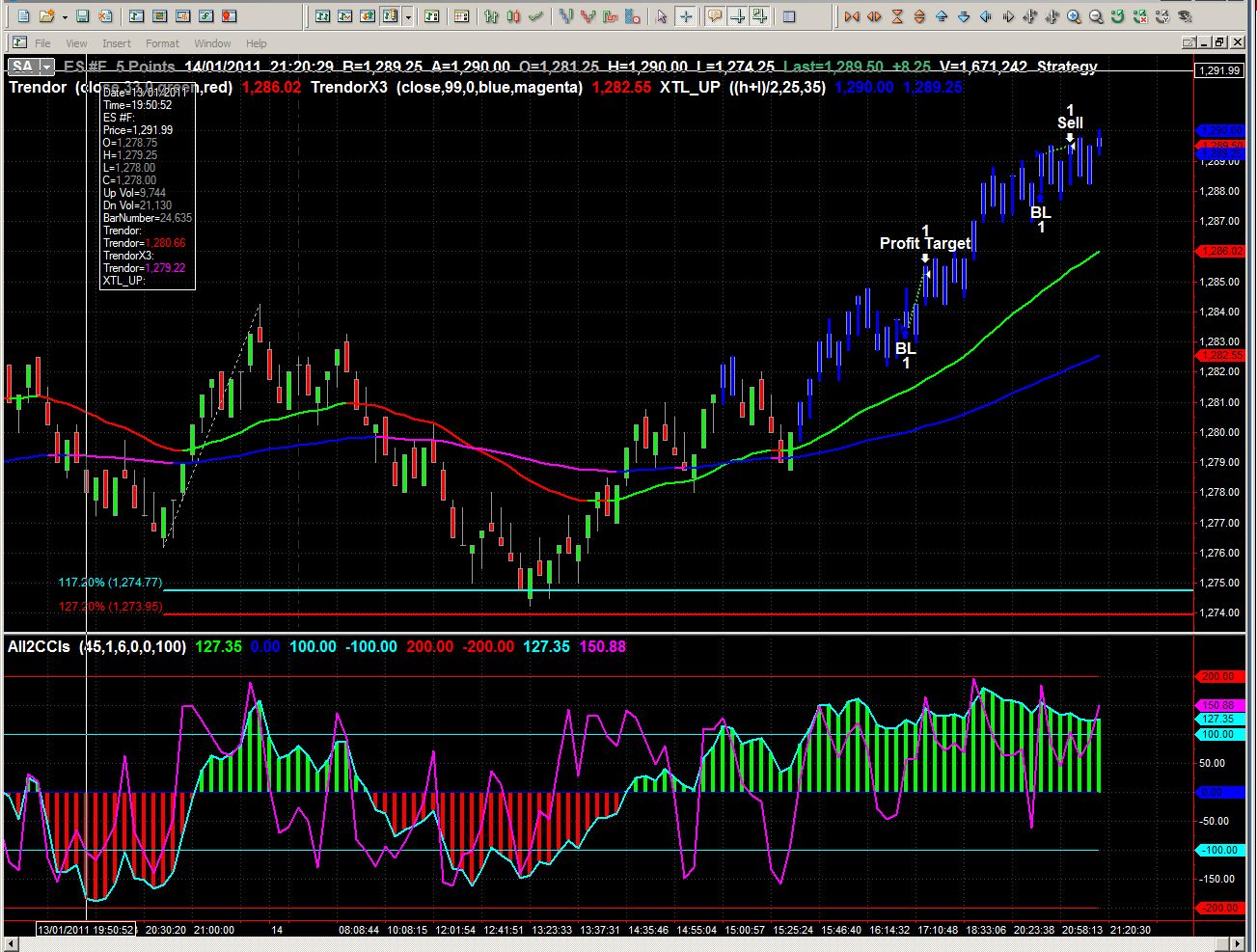
Today was an interesting day in the ES. The vid tells the story.  Youtube is having issues formatting the video so if it's still black it means it has not been processed by them yet. Been waiting an hour and have uploaded 2 versions.


Our big gift for small businesses

To kick off 2011, we wanted to thank a few small businesses for taking the first step toward enhancing their online presence—and to provide additional resources for achieving this goal. So over the holiday season, we paid a surprise visit to five small businesses who recently started advertising their businesses online: Create A Cook and Twinkle Star in Massachusetts, Ramy’s Garage and Atlas Flooring in Texas, and Cloud 9 Frozen Yogurt in Georgia. These small businesses span several industries, but their founders share one common goal: to expand beyond their brick-and-mortar storefronts and into the world of e-commerce.


To help, we gave them each of them $100,000 in AdWords spend for 2011 as well as free consultations with AdWords representatives. Because we know online presence means more than just AdWords, we’ll also be providing them with web consultations, wireless service for the year as well as a few other little surprises. See footage from our surprise visit below:


We’re looking forward to making big investments in small businesses far beyond these lucky five. Small businesses have long benefited from Google products and services; now our hope is that all small business owners can have greater access to the tools and training they need to develop a cohesive strategy for doing more business online. We started last year by creating the Google Small Business Center and asking small business owners about their biggest wishes for 2011. We received an overwhelming response from business owners who, like the owners of these shops, want to do more business online in 2011.


The Google Small Business Team surprises Atlas Flooring in Texas.


We’re thrilled to help these five small business owners find online success in 2011 and we think we have a lot to learn from their experiences. We’ll check in on them from time to time and report on their successes as well as their growing pains.


In the meantime, check the Google Small Business Blog for updates, and if you’re a business owner, visit the Google Small Business Center for information on how you can bring your business online in 2011.


Posted by James Croom, Product Marketing Manager, Google Small Business Team

Day at FAR...

Thursday we had a delivery of new clean propellant. So we got up at 5am and drove to FAR.
We waited three hours for the delivery truck who thought the road was still to rough so we met him at the end of the pavement and took the delivery the rest of the way in our truck.

We then set up the test stand and fired the stainless DMLS motor. It was much better than last time, but we still have catalyst issues as we were not getting full decomposition. The beginning and end of the very long run were identical so we are no longer poisoning our cat packs.!!
I think I need to add some anti channel baffles.

The test stand worked flawlessly and set up to fire time was less than 45 minutes with just two of us.

After we finished that I went back and made another attempt on the generator:

I replaced ALL the banjo fitting seals and soft feed tubing. After doing that the prime pump was much more solid and priming was faster and seemed less random. The Motor still did not run.

Then I removed the side panel (Item D in the picture from two posts ago) and tried to figure out what moved when your moved the shutoff lever..... nothing moved.....

Then I removed the fittings and bolts holding block Item 9, from the top of the injection pump.
I discovered that the pump pistons have a little cam arm that comes out and engages a rod that should be moving. One of the injector pistons is stuck in the full up position and will not turn as it should. This jams the rod keeping all of the injector piston cams stuck in the shutoff position.
I freed that piston and reassembled everything.

Now when you move the shutoff lever you could see moment inside the area exposed by cover Item D. When the motor was turned over the outlets made little sequential squirts.!!!!

After fully reassembling everything the Generator started on the second attempt.
We then cleaned up the oily mess inside the generator enclosure from all the bleeding.
We buttoned up all the covers and ran it one more time. We now have a generator!!!!

Many thanks to Dave Weinshenker for the diesel help. He deduced what the problem was and provided me the information I needed to resolve the issue.


I should have data and possibly video of the rocket motor test in the next week some time.
I won't have much time this weekend as my Dad fell down and is in the hospital (Nothing major, he should be out Today) We also have a 99th birthday celebration for my Step Mom's mother this weekend.

Kamis, 20 Januari 2011

Something's Broken? Part 1

The last few days I have had both emails from students and from readers asking about when to stop trading on a losing day, or whether one should have a daily loss limit. Some of this was because of the post looking at whether one should have a daily profit target or not, but also from traders who had been having a string of profitable days before hitting a deepish pothole.

The first job is to identify that something is different. The something different can be that the bars on the charts are not as smooth as usual or that the EMAs are going sideways or that the CCIs are chopping around the zero line, or, it can be that you have a stomach ache or are thinking about the fight you had with your spouse or that you feel out of sync. The result may be that your loss pattern is different. Have you traded your TP?

Losing days for inside-out trading are a result of sideways markets where the moves are not long enough to give a profit. In my course I teach traders to switch modes when they identify those markets and to trade outside-in. Identification is the issue because you need to know its chop before you lose too much. Whether you use EMAs or ADX or something else, being aware of market conditions is important.

If something different is happening and you are losing and don't know why, I think you should definitely stop. Trading in the dark is the road to losses. Once you have identified what is happening, then the next job is finding a solution. We'll look at this in the next part and talk about profit and loss limits in yet another part.

The video of today's ES trading is based on Market Profile and shows how I use it. In addition to what I talk about in the video, the info from the range bar chart helps time the trades too.

Rabu, 19 Januari 2011

What a Business

Do you think of trading as: "What a business!" or "What? A business?".

My Dad developed real estate. His projects were always successful unless he got caught by the cyclical recessions that came and went. This taught me a couple of important lessons which I apply to my business.

Firstly, when, as a boy,  I asked him how he knew that the project was going to be successful he said, "I make my profit going into the project. I do my research and then I buy the land and improve it's value by getting a building approval onto it. I then build the building while I sell it to buyers off the plan. I know it will be profitable because each step improves value."  This taught me to do a lot of preparation in my methodology and make sure that the odds were on my side when going into a trade. Assuring my profit going in.

The second lesson I learned is that stuff happens. Recessions come, wars break out, announcements are made. Don't take overnight positions.

Although I have wandered from this last lesson somewhat, I do it in a very protected way. I use options extensively as part of my strategies. The bulk of what I make comes from intraday, as it's safer. Lots of smaller risks are more comfortable than one larger risk.

So in constructing a TP, these are the things to also keep in mind. It's not very different to any other type of business in that respect. Can you imagine a business surviving if it only made profits on, say, 40% of it's sales and lost money on the other 60%?

Due to the way I envisioned today, I did NOT tweet the Gap trade. The market went down as I envisioned. I'm showing a 3 tick range bar chart today to show what I do when I want to see more or scalp. As it turned out, today this chart gave a much better entry into the ES shorts than the 5 or 6 range bar chart.  Price did the right thing and hit my Fib line targets too. This is discretionary trading.


Selasa, 18 Januari 2011

Trading Every Day to Make a Living: Part 4

OK, we have all the ideas in Parts 1 to 3. Now how do you make at least $250 a day?

It's all based on your win rate.

As a rule of thumb, the closer the target of your trade, the higher the win rate. I want a win rate of at least 75%. In the design of the strategy, I also have to match the drop dead stop loss or use an optimised or logic based stop (eg ATR stop or MOMDOT Stop or EMA stop, etc) to the strategy. The type and design of the stop loss is also dependent upon whether I want to trade by HT or completely automated.

OK, my target is $250 per day or 5 ES points or, better still in today's markets, 20 Euro futures ticks.

After building, back testing and forward walking (SIM) my HT system, I arrive at, say, the following stats, for the Euro in this example (real example from my trading):

Win rate 80%
Average win/Contract: $112.50
Average loss/Contract: $212.50

For every 10 trades I make 8 x $112.50 = $900
For every 10 trades I lose 2 x $212.50   = $425
I pay brokerage                                    = $60
                                                            ________
Net Profit                                              = $415

There is an average of 12 trades a day during the hours I would trade, so my $250/ day is doable on the maths. My testing is confined to my trading hours. If the number of trades are fewer, or the net profit less, then I would have to adjust the number of contracts traded so that my expected profitability is more than the $250 plus the buffer, as I explain below.

As I have a 20% loss rate, I take my daily profit requirement and add 20% to it to make it $300.

I now implement my strategy. I KNOW my trader's profile because it has been tested. I trade every day until I make $300. The extra $50 will pay for any losing days. If I want to make $500/day, I double the number of contracts. I don't trade longer hours unless the TP has been revised and tested as before.

When creating a trading algo for both fully automated trading and HT, there are a number of DON'T DOs, which include:
1. Don't create a strategy based on curve fitting rather than fitting the strategy to the market. Curve fitting shows a mythical profitability as there is  No real "edge". The methodology I use is all described in this blog. The DVD training sets out the trading pictures in detail and show, live, how I trade them. Incorporating these into HT is an extra programming step but many of you will have already done that as part of your back testing. You can use any alternative strategy that you find suits you and have tested correctly.
2. Don't leave out testing properly and Don't forget the importance of forward walking. Unless the traders profile is known, #3 will kill this idea because of this "don't".
3. Don't cherry pick trades. Not sticking to the strategy because the trader has not done the work to KNOW their trade profile and thus not having the confidence to follow his own rules is a definite way to find it hard to trade successfully.

I firmly believe that no matter what anyone says, the high win rate is a critical psychological component of CP. Most of us find it hard to put on a trade that may have a significant financial impact if our statistics show that there is, say,  a 60% chance of it being a loser. That's one of the reasons I have my students trade the most minuscule size possible when they start so that no matter what, the financial impact is the least possible. It's just easier to maintain discipline.

Below is the chart of this morning's (London time) Euro trading. As you can see, there were 5 trades, 4 winners and 1 loser. The winners each made 14 ticks per contract and the loser lost 14 ticks- all on a fully automated basis. As HT, I ran the 4 winners as is, but managed to cut the loss on the loser to 11 ticks. The net result was $475 as fully auto and just over $500 on an HT basis, all per contract. After the 5th trade, I turned Flo off, as I was finished for the morning.


This morning I tweeted, London time:
$ES_F Looking for resistance for the Gap trade at 1293/94 area. Blast past 94 invalidates. Jan. 18 at 11:05 AM

Price touched the 1293.00 and was easy to see the short at 1292.25 - a great trade down to 1286.75 where I covered at my Fib number. These Gap trades are high win rate trades and are very black and white to do and you can easily see when you are wrong.

Senin, 17 Januari 2011

Trading Every Day to Make a Living: Part 3

The way I set up my auto trader, Flo, for Hybrid Trading is very different to the parameters for my algos of the completely unattended auto trading. While the methodology is the same, the way that it is managed is different. There, I'm after the best return on investment, unattended.

There was a comment to Friday's part 2 post saying: "Your losers are three times as big as your winners so wouldn't the drawdowns (troughs) be large?" The annual maximum drawdown ran at less than $2,000 per contract traded as a fully automated basis and on a managed basis I estimated it to be half that. By using HT, the average losses are NOT three times as big as my winners. That's the point of HT. But even if they were, the high win rate makes the overall method profitable, as long as the winning trades are traded to a reasonable percentage of their potential.

For HT, I am after a high win rate only, with optimised drop dead stops and optimised first scale out points.  The aim of HT is to increase profitability from that base using discretionary but rule based trade management.

I put the above in bold because it's important to understand this. Every trade's outcome is different, although the general entry criteria may be the same. It's what happens after the entry that determines the outcome. I look for trade entries that fit my Trading Plan. However, I cannot program in all the context that, as a discretionary trader, I use. So Flo enters in HT mode with an optimised drop dead stop and optimised or money related first scale out target. I then have to manage the trade.

Some trades I scratch straight away. For example, a long just below a strong resistance and that has the odds against the trade, I scratch. I manage my losing trades so as not to lose the whole drop dead stop. I typically have a drop dead stop of around  $300/contract for the ES in case I need to double down. But I rarely use it. The market tells me to get out much earlier, but as it's different for every trade and not a fixed number, I can't as yet program all the possibilities. Also, using HT, I can add trades that Flo misses.

The same goes for profit targets. Every trade is different. Using a fixed profit target would limit my profitability, so I have a first scale programmed where I exit at least a third, but I manage the rest. I have a version of Flo HT with scaling out built in that I use when I'm not paying attention. It does well but not as well as when I manage manually. Again, because every trade is different, I manage my exits to make sure that I can earn the most after assuming the risk of the trade.

When setting up Flo to run in a purely automated way, the result is that the win rate is lower and the trade profile is very different. 

HT can be used in many ways but I see a lot of merit in it for many traders, as HT helps get into the trades in a consistent and disciplined manner. This is a big component of what is required for Hybrid Trading. Managing the trades after entry can be done using strict rules that are consistently applied.

Beginning traders can start with a more robotic approach, having programmed stops and scaled out exits, and as their skill level improves with screen time, they can slowly take more hands on control.


On Saturday, I sent the screen shot above to one of my students. It is Friday's ES RTH trading. This is a good example of HT . As I said, We have programmed Flo to achieve fairly high win rates and profitability, yet there are times when I override her by scratching a trade, moving profit targets up or down, or moving stops closer (never further).

The question I have been asked is "Why?" If Flo is doing OK, why do I mess with her? There is an opportunity cost to trading. If I'm risking my money, I want to maximise the return.

Looking at Friday's ES, the key to the RTH session was the Gap trade. I tweeted it a few times on previous days to draw your attention to this great type of opportunity. Friday's Gap was especially low risk and high reward for me because of the Fib point below that fit the MP context so perfectly. It was really easy to see if I had been wrong.

What followed from that successful Gap/Fib entry was that I had great confidence in Flo's long trades after that. In fact I increased size and did not exit the extra lots, as per Flo's all out exit, but rather scaled as I do manually and then reloaded at the next Flo long signal. The end result was a pretty awesome green day.

Looking at Flo's results, they were great. 100% for 2 trades, 2 ES points. Again, win rate is king. With a high win rate I can trade size with confidence, as the drawdown can be managed. With a low win rate the drawdowns can bury you without a trace and your account can be empty by the time the winning trades decide to appear and match your stats. The basis of what I teach students to get to CP is the maintenance of this high win rate. The psychological and financial criticality of this aspect of my strategy should not be under rated.

For me, HT is definitely the best of both worlds.

Holiday in the U.S. I traded a bit of Euro futures in the London morning but taking the rest of the day off.